uae-vatregistration.com

UAE VAT Registration: The Ultimate Step-by-Step Guide (2026 Edition)
UAE VAT registration made simple. Follow our 2026 step-by-step guide to register with the FTA, avoid penalties, and stay compliant. Contact experts today.
Gupta Group International
1/15/20265 min read


UAE VAT Registration: The Ultimate Step-by-Step Guide (2026 Edition)
UAE VAT Registration: The Ultimate Step-by-Step Guide (2026 Edition):
Understanding VAT registration in the United Arab Emirates (UAE) is a must-have skill for business owners, accountants, and compliance teams. Whether you are launching a startup, entering a new market, or reviewing your tax obligations, this guide provides clear, up-to-date, and in-depth insights into VAT registration in 2026 — from thresholds and required documents to submission, penalties, and best practices.
What is VAT in the UAE?
Value Added Tax (VAT) is a consumption tax applied to the sale of most goods and services in the UAE. The standard VAT rate in the UAE remains 5% — one of the lowest globally — but businesses must collect and remit this tax once registered.
VAT was introduced to diversify government revenue and align the UAE’s tax frameworks with global standards.
Why VAT Registration Matters:
VAT registration is more than a legal requirement — it’s a business credibility signal and a foundational step in fulfilling tax obligations.
Key reasons VAT registration is critical:
Legally required once thresholds are surpassed.
Enables a business to legally charge and collect VAT.
Eligible businesses can recover input VAT on purchases.
Helps avoid steep penalties and legal action for non-compliance.
Failing to register on time can lead to fines, increased scrutiny from the Federal Tax Authority (FTA), and reputational risk.
Who Must Register for VAT in the UAE?
Understanding when a business must register for VAT is foundational.
1) Mandatory VAT Registration
You are required to register for VAT if:
Your total taxable supplies and imports exceed AED 375,000 over the previous 12 months, OR
You expect your supplies to exceed AED 375,000 in the next 30 days.
This is evaluated on a rolling 12-month basis — not a fixed calendar year.
2) Non-Resident Businesses
Foreign businesses supplying taxable goods or services in the UAE may also need to register regardless of turnover thresholds.
Mandatory vs. Voluntary Registration:
1) Mandatory Registration:
Required once your taxable turnover crosses the AED 375,000 threshold (annual).
2) Voluntary Registration:
This option exists for businesses that:
Have taxable supplies or expenses exceeding AED 187,500, but below the mandatory threshold;
Want to recover VAT on business expenses early;
Want to build additional compliance reputation.
Note: Even if voluntary, registration triggers VAT obligations such as filing returns and maintaining records.
Step-by-Step VAT Registration Process (2026):
This section is your practical roadmap — from signing up to receiving your VAT registration number.
Step 1: Create an EmaraTax Account:
The first step is to create an account on the EmaraTax online portal — the official FTA platform used for VAT services.
Visit the FTA portal’s e-Services page.
Register with your business email, mobile number, and Emirates ID (or equivalent for non-residents).
Verify your account via OTP or UAE Pass.
This account will manage your VAT profile throughout your business lifecycle.
Step 2: Prepare Required Documents:
Organize all supporting documentation — this is one of the most common points where applications get delayed or rejected.
Trade License (latest valid version)
Certificate of Incorporation / MoA
Emirates ID & passport copies of owners or partners
Bank account details / bank letter
Monthly sales and taxable supply summary
Contracts, invoices, lease agreements
For non-residents: proof of UAE taxable activities
Step 3: Complete the VAT Registration Form:
Once logged into EmaraTax:
1. Go to your dashboard.
2. Create a new “Taxable Person” profile.
3. Select “Register for Value Added Tax (VAT)”.
4. Fill in business details, estimated turnover, activities, and contact info.
5. Upload the required documents.
Make sure to double-check all fields — submission of incorrect information can delay approval or trigger penalties.
Step 4: Submit and Track Application:
After submission:
Your application will be reviewed by the FTA (usually ~20 business days).
Track status via your EmaraTax dashboard — updates and requests for additional documents often appear here.
Step 5: Receive Your TRN (Tax Registration Number):
Once approved:
🎉 You will receive a 15-digit VAT Registration Number (TRN).
The TRN is mandatory on VAT invoices, tax returns, and all related correspondence.
Required Documents & Supporting Evidence
A complete documentation package is critical. Commonly requested items include:
Trade license and commercial registration
Partner/owner IDs (Emirates IDs + passports)
Bank account letter (business name and IBAN)
Financial statements or turnover summary
Sample invoices and contracts
Lease agreements or proof of address
Note: Scanned copies must be clear, within acceptable file sizes, and formatted as PDFs or DOCs.
Common Mistakes to Avoid During Registration:
Even minor errors can derail or delay VAT approval:
Missing supporting documentation
Misreporting turnover (especially projection figures)
Incorrect business activity classification
Uploading blurry or incomplete scans
Preparing a checklist and quality control review before submission significantly improves success rates.
After Registration: Your VAT Obligations:
Once registered:
You must charge 5% VAT on most taxable supplies.
VAT invoices must include your TRN.
File VAT returns regularly — typically quarterly, unless the FTA assigns monthly filing (e.g., high turnover).
Retain tax records for 5+ years (15+ for real estate).
Failure to fulfill these obligations can attract penalties.
VAT Compliance & Record-Keeping:
Robust record-keeping ensures you’re always audit-ready.
Best Practices for Records
Maintain digital and organized records.
Retain invoices, receipts, contracts, and bank statements.
Use accounting software with VAT reporting features.
Tip: UAE audits are increasing — having accurate records drastically reduces risk during compliance checks.
Penalties and Consequences of Non-Compliance:
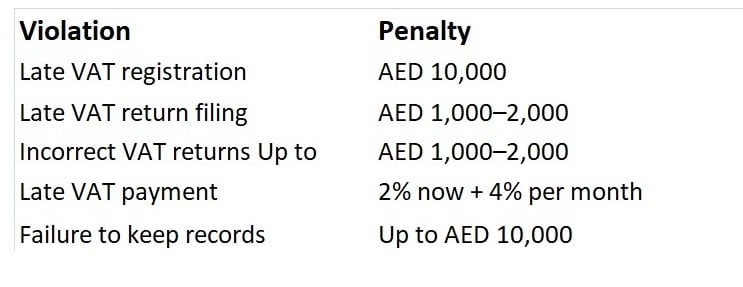
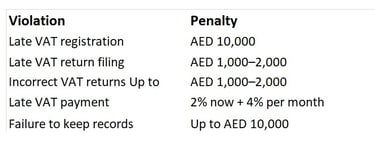
The FTA enforces compliance with significant penalties for late or missed actions. Here’s a snapshot:
Note: Penalties can escalate with repeat violations and may extend to audits or legal enforcement.
Tip: The FTA may reduce penalties via a voluntary disclosure if you correct errors proactively before an audit
VAT Deregistration Criteria:
VAT deregistration can be considered when:
Your taxable supplies fall permanently below the mandatory threshold;
Your business ceases operations;
Certain structural changes are made (e.g., mergers).
Deregistration must be done within a defined timeline to avoid penalties.
VAT Registration for Non-Residents:
Non-resident businesses that make taxable supplies in the UAE also need to assess whether they must register.
Non-residents must register regardless of turnover if they supply taxable goods/services without a UAE-registered agent responsible for VAT settlements.
Non-resident registration processes are similar, but documentation requirements may differ slightly.
FAQs (Frequently Asked Questions):
Q1. What is the mandatory VAT threshold in the UAE?
➡ AED 375,000 in taxable supplies over a 12-month period.
Q2. What is voluntary VAT registration?
➡ Businesses with taxable supplies or expenses of AED 187,500+ can register voluntarily.
Q3. How long does VAT registration take?
➡ Typically ~20 business days if documentation is complete.
Q4. Can penalties be reduced?
➡ Yes, via voluntary disclosure when errors are corrected before an FTA audit.
Strategic Tips to Stay Compliant in 2026:
Automate VAT accounting – Prevent errors and missing submissions.
Monitor turnover monthly – Avoid missing threshold triggers.
Review VAT invoices carefully – Mistakes are a leading cause of fines.
Stay updated with FTA updates – Regulations evolve year-by-year.
Plan for e-invoicing compliance – Mandatory phased rollout in 2026.
Conclusion:
VAT registration in the UAE is a cornerstone of tax compliance. With clear thresholds, defined procedures, and digital submission platforms, most businesses can complete this process effectively — provided they prepare the required documents and stay vigilant about compliance timelines.
By following this 2026 edition guide, you now have a complete resource to navigate VAT registration with confidence and accuracy.
© 2026 uae-vatregistration.com
